
Web research
Agents search the open web, read specific pages, and synthesize the findings into a sourced answer — not a pile of links.
Ask a question that needs current, outside information and an agent will go find it: run searches, open the pages that matter, and hand you back an answer with the sources it used. You delegate the digging; you get a synthesis you can check.
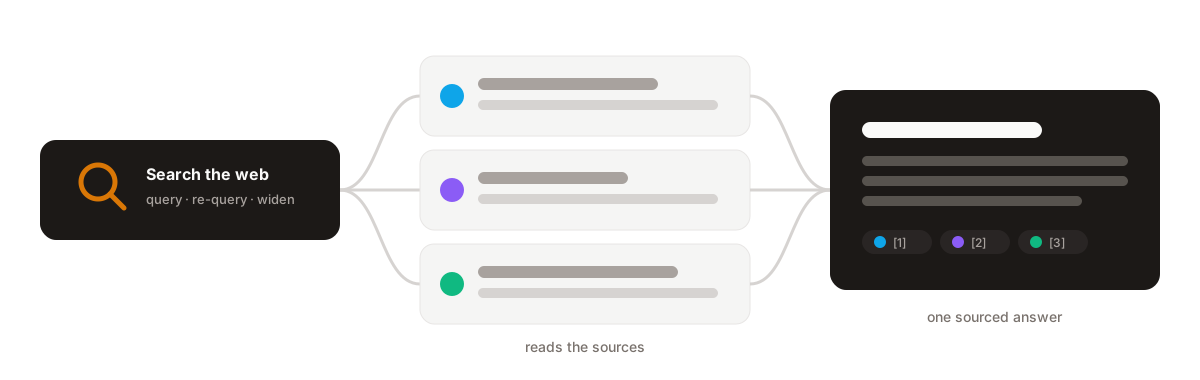
What an agent can do
- Search the open web — run a query and get back a synthesized answer with source citations, not a raw results list. A single query can trigger several search rounds behind the scenes (up to ten), and the agent can run more queries to cover a question from different angles.
- Read a specific page — when a source needs to be opened directly (a report, a docs page, a pricing table, an API), the agent fetches that exact URL and reads what's on it.
- Synthesize with sources — the findings come back combined into a clear answer, with the URLs it drew from attached so you can trace any claim.
What comes back
Every search returns the answer and its citations — page titles and URLs, plus how recent the page is when that's available. That means the agent's conclusions stay auditable: you can see what it read before you act on it.
From search to a research deliverable
For anything bigger than a single question, the Deep Research playbook runs web research as a staged pipeline instead of a one-off lookup:
- Research — an agent searches broadly, gathers findings by subtopic, and records every source and any contradictions it hit.
- Analysis — a second agent weighs source credibility, resolves conflicts, and pulls out the themes and gaps.
- Report — a final agent turns that into a polished, cited report ready to share.
Each stage pauses for your approval, so you steer the direction before it becomes a finished document.
Where it fits
- Deep Research playbook — the staged version of everything above.
- Documents and reports — turn research findings into a shareable deliverable.
- Data and analysis — pair web findings with your own numbers.
- Memory — so what an agent learns carries into the next task.