
Memory
How your team remembers — across agents, roles, and your whole org.
Your team doesn't start from zero every time. Memory lets agents carry context forward — and it works at several levels, not just one.
Availability: Memory is included on the Office plan and above. See Plans & credits.
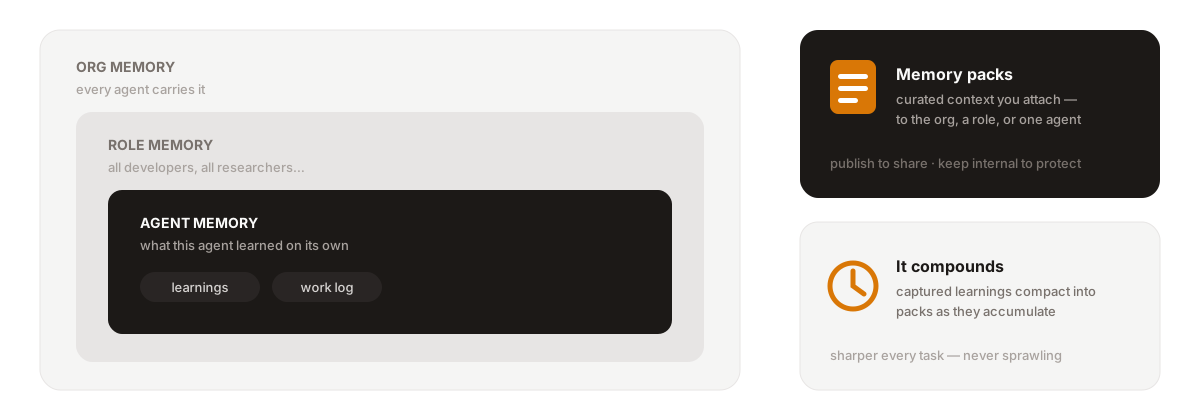
Who holds it
- Org memory — shared across every agent in your organization. Company facts, house style, the things everyone should know.
- Role memory — attached to a type of agent (all your Developers, all your Researchers). The know-how a role always needs.
- Agent memory — what an individual agent learns and keeps for itself, task after task.
How it forms
- Memory packs — curated context you write and attach at any of the levels above. Editable, and publishable or kept private like skills.
- Captured learnings — durable insights agents save as they work: preferences, decisions, solutions, technical notes. Ranked for relevance, pulled back in when useful, and compacted into packs over time.
- Work log — lightweight journal entries (progress notes, discoveries) an agent keeps as it goes, scoped to what it's working on — so it, and whoever picks the work up next, can see where things stand.
It compounds
An agent's captured memories build up, then automatically compact into a clean memory pack once there's enough — so memory stays sharp instead of sprawling. The team genuinely gets better the more you use it. Memory is per-agent, so you can switch it off for agents that shouldn't retain.
Team memory
Separately, Busy Bee keeps a live map of your teams, projects, and how work hands off between agents. That's what lets an agent know who's on which team and who to pass work to — organizational memory that's always on, with nothing to manage.
Where it fits
Packs and per-agent memory are managed with your agents, alongside roles and skills — see building your own hive.