
Playbooks
Ready-to-run jobs that bundle the steps, a real starter scaffold, and prompts to fill in — so the first pass lands closer.
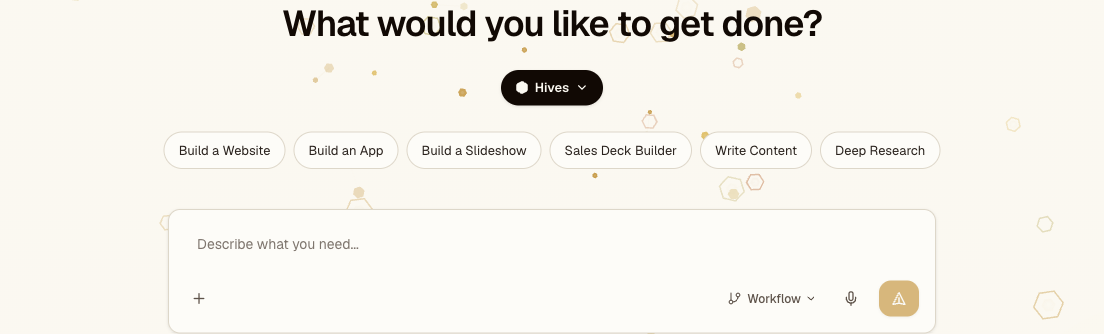
A playbook is a job your team already knows how to run. Instead of writing a request from scratch, you pick the job you want done — build a landing page, write an email campaign, run a market-research report, audit an app — adjust a prompt, and send.
What a playbook packages
Each playbook bundles three things so the work starts from something, not a blank page:
- The procedure. A fixed set of steps, each handled by the right role, with approval points built in where you'd want to sign off before the job moves on.
- A real starter scaffold. Build jobs open on an actual running project — a working Next.js site, an app with a database already wired up, or a slide deck skeleton — not an empty folder. Your team edits from there.
- Helper prompts. Each playbook comes with a short menu of concrete starting prompts (for example, a landing page has "SaaS product page" or "Event or conference page"). Pick the closest one and edit it, or write your own.
Why the first pass is better
A blank prompt makes the agent guess at structure, tools, and setup. A playbook removes that guesswork: the steps and roles are already chosen, a scaffold with the right pieces already exists, and the starter prompt already frames the ask. Your team spends its first pass on your actual content instead of standing up the project.
Where they live
Playbooks are grouped by domain inside hives — each hive is a team stocked with the playbooks and roles for its kind of work.
Where it fits
- Using playbooks — pick one and run it
- Building your own — turn a repeatable job into a playbook
- Hives — the teams that carry the work