School of Agentic Operations · Est. 2026
Everyone prompts.
You’ll learn to operate.
One road, zero to one hundred: from “what’s a chatbot?” to a team of AI agents shipping real work — under your direction, with your sign-off. Taught by Double O, the agency that runs its own operations this way.
Never touched an agent? This road starts at zero.
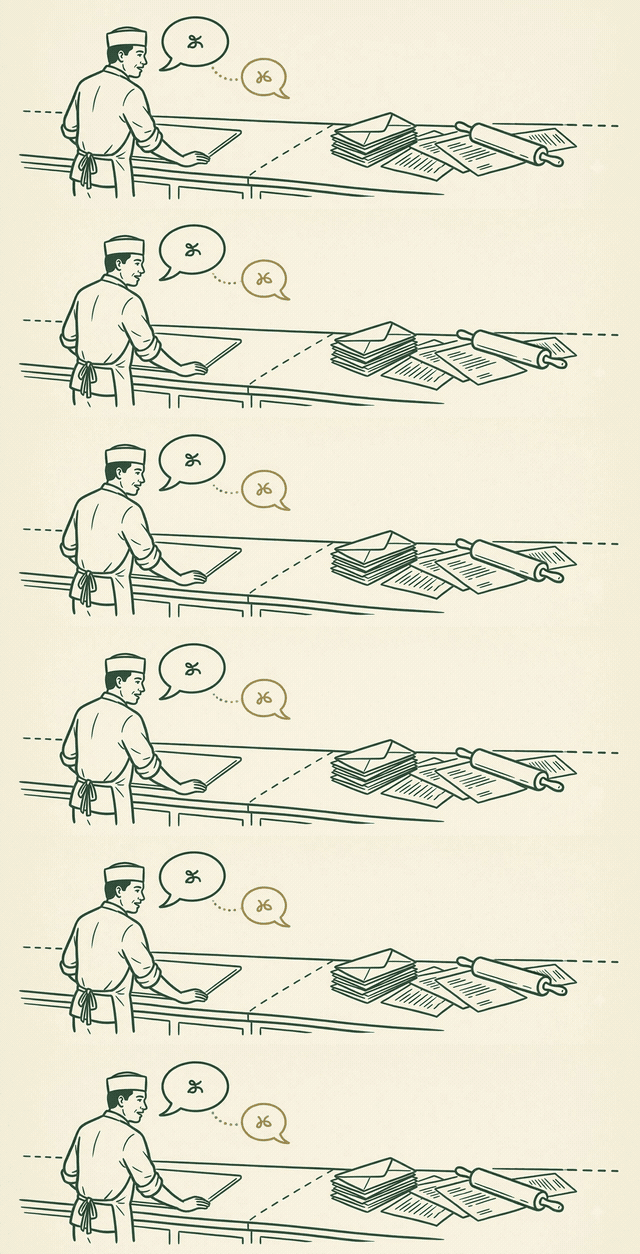
A chatbot
You ask, it replies — then the doing is still on you. Copy, paste, format, send, follow up. Helpful for questions; no help when work has to happen.
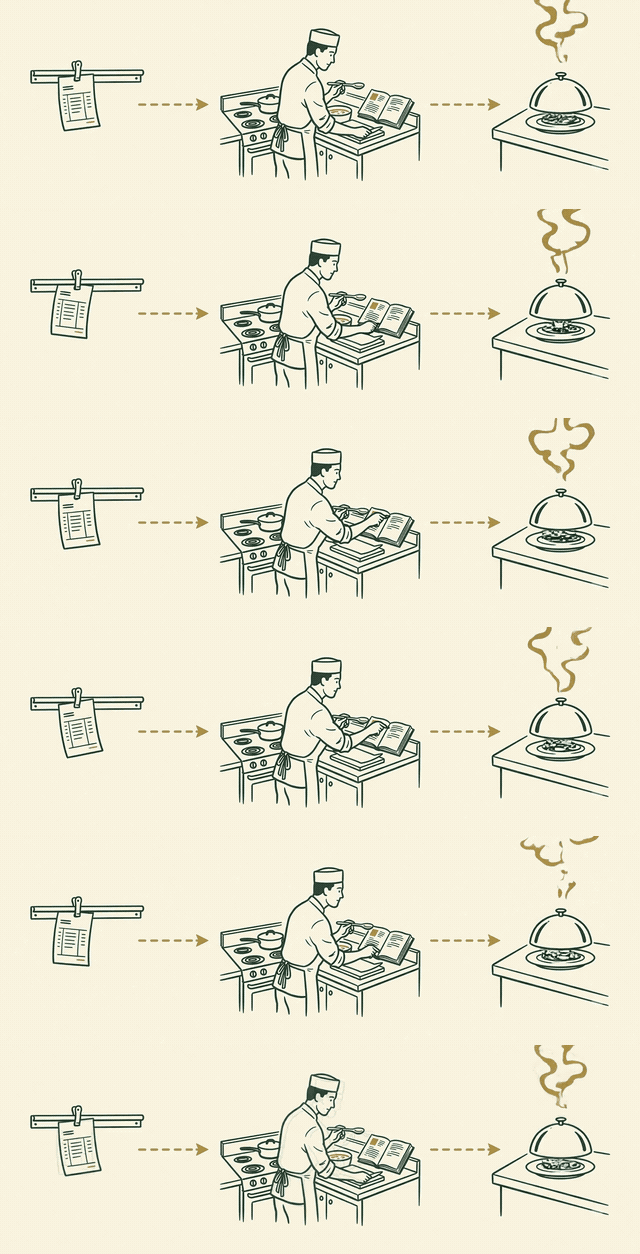
An agent
You give it a goal. It plans the steps, opens the tools — browser, documents, spreadsheets — checks its own output, and returns with the task done, not described.
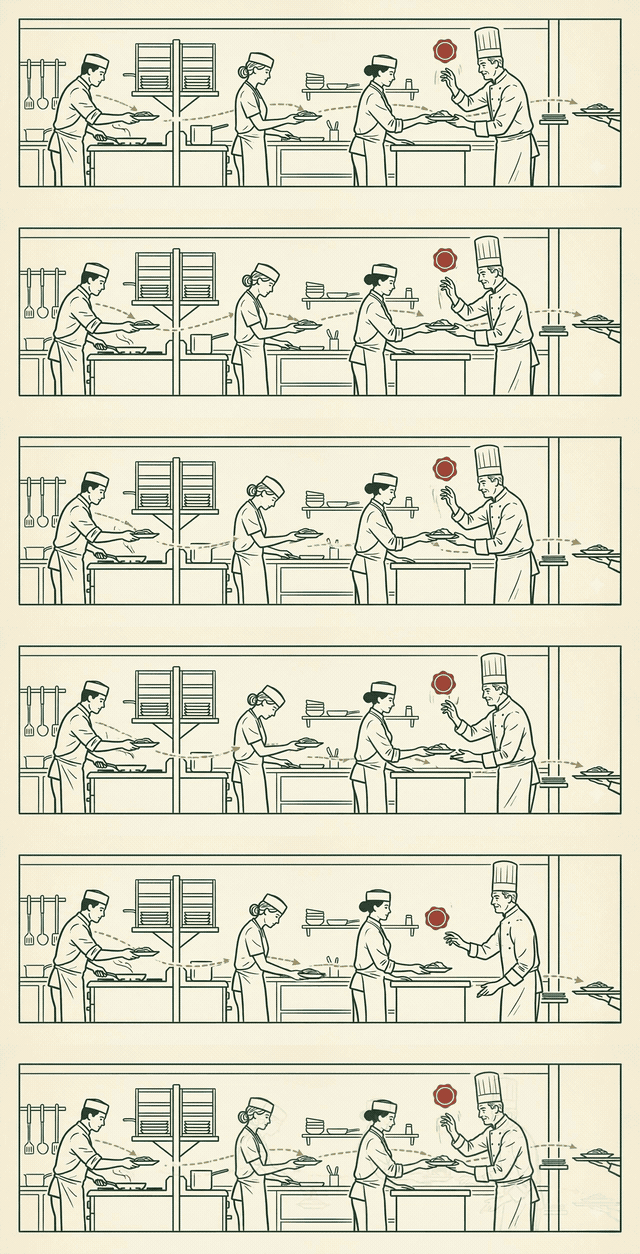
An agent team
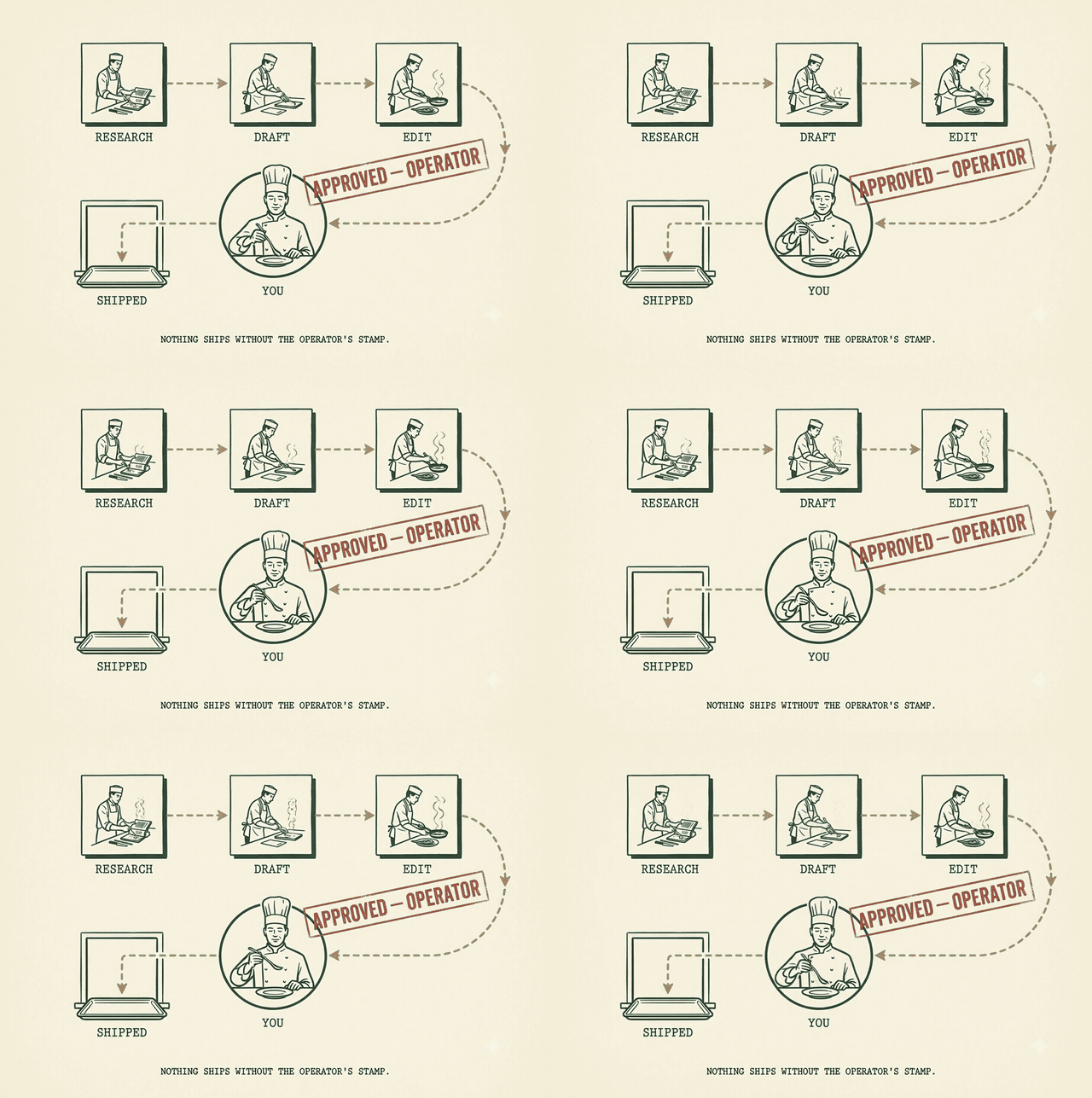
Specialists hand work down a line — research, draft, edit — and pause at checkpoints where you approve, reject, or redirect. Directing that line is the skill this school teaches.
If you can review someone else’s work, you can learn to operate. Lesson 0 assumes nothing — it’s 25 minutes and your first agent does the rest.
Prompting is asking. Operating is directing.
Every chapter is four beats
One diagram, about 150 plain words, something to try before the next idea, and three things to notice. No jargon a 12-year-old couldn’t repeat back — concepts you’ve touched stick; concepts you’ve read about leak.
Agents work. You decide.
The core skill isn’t writing clever instructions — it’s decomposing work, setting checkpoints, and judging output. You’ll reject work, demand revisions, and learn what good delegation feels like.
Taught by practitioners
Double O builds agent systems for businesses — and runs its own agency on them. You’ll practice on Busy Bee, the same platform our agents work on every day. We teach what we operate.
Zero to 100 — sixteen chapters, four arcs.
Talk, Work, Team, Operate. Chapters 1–8 are free; the road starts in any chatbot you already have and graduates onto a live agent workspace at chapter 5.
Chatbots — the machine that read everything.
Imagine someone who read almost every book, website, and conversation ever written — and got very good at finishing sentences. That’s a chatbot. It’s brilliant company and a terrible employee, and understanding why is the whole point of this arc.
Someone who read everything — and learned to finish sentences. A mountain of text, a machine that learned one game (guess the next word), and a chat window on top. Explain it at dinner without the word “algorithm.”
TRY IT · Ask the same question three ways; watch the answer change with your wording.
The best first draft in the world, of anything made of words. A menu consultant, not a cook — stop asking for answers, start asking for drafts. Answers you have to trust; drafts you get to judge.
TRY IT · Turn a messy 30-second ramble into a clean, friendly message in one pass.
No magic words — just the order ticket: what you want, who it’s for, what matters, what done looks like. And you get to send it back; a second draft costs one sentence.
TRY IT · Same request, twice: once bare, once as a full ticket. Compare plates.
The honest chapter. It can’t do anything, it forgets you, it doesn’t know your stuff, and it sometimes makes things up — confidently. Four walls, and every wall has a door.
TRY IT · Ask it to actually send the email it just wrote. Watch it apologize.
The agent — a chatbot with a kitchen and a work ethic.
Take the one who read every cookbook and give them a kitchen — a stove and knives (tools), an order pad (memory), your pantry (knowledge), and one house rule: taste as you go. Now it doesn’t just talk about dinner — it serves it.
Every door from Chapter 4 opens: a stove (tools), an order pad (memory), your pantry (knowledge), a tasting spoon (checking). An agent is a chatbot with a kitchen and a work ethic.
TRY IT · Give the same ask to a plain chatbot and to an agent. Feel the difference.
Plan → cook → taste → adjust → plate. The trace is receipts for every step — you don’t watch it work, but you can always check how, not just what.
TRY IT · Replay your Chapter 5 run’s trace; find the moment it corrected itself.
The ticket comes back — and now it costs groceries. A vague ask gets the wrong dish cooked beautifully, so an agent’s ticket earns one new line: boundaries.
TRY IT · Fix a deliberately bad work order; run both; compare plates — and clocks.
Order from your home cuisine — commission work on a topic you know cold, find the one thing wrong (there’s always one), and send it back with one precise note.
TRY IT · Find the one thing wrong in the deliverable. There’s always one.
Many hands — specialists, handoffs, and the red stamp.
One cook can make dinner, but a kitchen has stations — someone preps, someone cooks, someone plates — and the head chef tastes before anything leaves. Agent teams work the same way, and you’re the one who tastes.
One cook, one banquet, one disaster. Stations fix it: slice work at the natural seams and give each specialist an index-card ticket with its own “done looks like.”
TRY IT · Split one oversized ticket into three station tickets; run it as a line.
What travels down the line is the tray: the work so far, plus a note. Grit passed at one seam is in everything downstream — check the seams, not the stations.
TRY IT · Read the trays: find what crossed 1→2 and 2→3 in your Chapter 9 run.
Nothing leaves the kitchen unless the chef tastes it. The plate that arrives is deliberately flawed — catch it, send it back in writing, and taste the rework.
TRY IT · Reject once, in writing. Watch the line fix exactly what you flagged.
Where the chef stands: gate what’s irreversible, sample what’s expensive, trust what’s checkable. Then bring a real piece of your week and ship it through your own line.
TRY IT · Your actual to-do item, done by your team, gated by you.
The workforce — parallel, scheduled, and running while you sleep.
So far, one ticket at a time. Now it’s dinner rush: a rail full of tickets, the whole brigade firing at once — plus a prep list that starts itself every Monday, and a plan for when a dish comes back at 8pm. This is the difference between using AI and running on it.
Dinner rush: a rail packed with tickets, stations firing in parallel, the expo merging plates at the pass. You cannot taste thirty plates — sampling is the skill.
TRY IT · Fire one question as ten tickets; sample the merged sheet hard.
The Sunday prep list: a ticket that fires itself on a clock. The design skill isn’t the schedule — it’s the bell, and the sous-chef’s checklist that makes it worth answering.
TRY IT · Design (on paper) your Monday-morning standing operation.
Good kitchens aren’t the ones where nothing breaks — they’re the ones where breaking is boring. Retry → re-route → ring; the only unacceptable failure is the quiet one.
TRY IT · Break a run on purpose; follow the ladder until it reaches you.
The capstone: a blank ticket and a real recurring chore. Design the kitchen, defend every choice, then turn it on. Graduate with an operation, not a certificate.
TRY IT · Design. Defend. Turn it on.
Class is a control room, not a classroom.
From chapter 5 on, every lesson runs on a live agent workspace. The left rail is your syllabus; the rest is real — agents executing, stages progressing, and the red gate waiting for your call.
The draft is in. Would you ship this?
The brief cites twelve sources but leans on two competitors and skips pricing entirely. An operator reads before stamping. What’s your call?
You don’t leave with a certificate. You leave with a workforce.
Everything you build on the road — your agents, your workflows, your shipped work — lives in a real workspace on Busy Bee, the agent platform Double O builds and runs on.
When you reach 100, the training wheels come off and the workspace comes with you. Your capstone operation keeps running; you keep operating.
“We don’t teach theory about our tools. We teach the way we actually work, on the platform we actually run.”
— Double O, Operating FacultyOperator, Class of Cohort 01
Graduates keep: their Busy Bee workspace, every workflow they built, their capstone standing operation, and a 14-day full-platform trial.
One road, sold in stretches — start free, go as far as you like.
The free foundations course — arcs 1–2 of the Zero-to-100 road. Arc 1 (Talk) teaches what a chatbot actually is, what it's great at, how to write the order ticket, and where it hits the wall. Arc 2 (Work) opens the four doors — tools, memory, knowledge, checking — and puts a real agent to work: the hiring test, the trace read in slow motion, the work order with boundaries, and the home-cuisine taste test. You leave running your first agent and judging its plates.
The certification course — arcs 3–4 of the Zero-to-100 road. Arc 3 (Team) builds the brigade: stations and seams, the handoff, the approval gate where you send work back with one written note, and directing your own real work through your own line. Arc 4 (Operate) teaches the rush: the ticket rail, standing operations and the sous-chef bell, failure that breaks loudly instead of quietly, and the capstone — a kitchen of your own design, defended choice by choice and switched on. You graduate a Certified Agentic Operator with an operation, not a certificate. Requires Zero to Agents.
The marketing vertical. Build the operations a modern marketing function runs on agent teams: content pipelines, campaign production, social scheduling, and channel-ROI reporting — each as a repeatable operation with your quality gate on it. Requires The Operator Track.
The advanced course. Take the capstone pattern to production: scheduled recurring runs, multi-team orchestration, escalation design, and the metrics an operator watches instead of the work itself. Requires The Operator Track.
Graduates of the Operator Track get first seats — and alumni pricing — on every track that follows. Want a track for your industry? Tell the faculty.
Cohort 01 — limited seats, real attention.
- All 8 chapters — Talk and Work, miles 0–50
- Chapters 1–4 run in any chatbot you already have
- A live agent workspace from chapter 5, no card
- Finish running your first agent — and judging its plates
- Chapters 9–16 — Team and Operate, miles 50–100
- Live agent teams, gates, and real compute included
- Cohort review of your capstone operation
- Certified Agentic Operator credential
- Prerequisite: Zero to Agents (free, above)
- Your ops team, trained on your actual work
- Private cohort with Double O faculty
- Ends with running workflows, not slides